Chapter 2 of the Great Consumer Wars
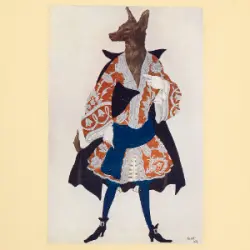 Story by Itsajackal on SoFurry
How the Stockpiles Wars turned into the Great Consumers' Wars
The Sockpile Wars, what Historians now call, "The Great Consumers' Wars," began with corporate stockpilings through mergers and acquisitions, between failing, bankrupt, and/or for-profit seeking "Mini-Corps." Boards looking to make even greater amounts of money and/or power bought almost any company to take over any void left in the market. By the end of the year, roughly 7 months after the invention of the Nutri-Bar, the amount of "Mini-Corps" fell from thousands, to the hundreds; while the largest merger at the time was between "Hammersmith & Sons" and "The SingSong Fishing Company," still technically the largest of that time based solely through water rights, had roughly 27 cities under their ownership. By the end of the year the largest "Mini-Corps" was "Almenian Space," with 55 cities from mergers and acquisitions, becoming the largest, at that time, corporation, based on physical assets alone. The owner of Almenian Space, Robert Almen, made his fortune from buying and selling stocks and bonds. He foresaw the for-profit incentives of future space exploration; and, using his vast wealth, acquired specific companies related to his beliefs in space exploration. He wanted to produce his own spaceships, train his own astronauts, build his own rockets, and launch his own satellites using his own designs and resources.
During his mergers and acquisitions spree, the physical effects of the Stockpile Wars kicked off, instead of following his lead, by procuring other companies to make money, many boards and prominent owners realized that true profits would lie in the selling off, in-bulk, of their whole assets. Not only would there be any upkeep or other expenditures on a 100% for-profit selling off of everything, it would make them extremely richer. This lead towards a scramble for every last resource, not to produce, like in the past, but to simply hold for future value. Entire industries stopped, supply chains ceased to function. Why pay wages to produce goods or services when one could just sell what they had, raw resources, remaining products, and all equipment, in one massive giant profitable bundle.
This is where The Great Consumers' Wars became a Consumers' Wars not just between corporations or companies. Thousands of workers were laid off, or put on leave, while still kept on contract, without hours or pay, just to show more value, while products stopped being shipped to stores, markets dried up, services stopped being provided; yet, this did not stop certain Consumers from spending. While some only bought for necessities, thousands still brainwashed by "Consumer's loyalty" kept buying from their Company until there was nothing left to buy. A notoriously famous example being MicKinleyland Parks, a famous vacation program company; created such an extremely high level of Consumer's loyalty, when the parks closed, and merchandise stopped being sold, their Consumers started selling Mickinley merchandise amongst themselves. Marking prices even higher, a notable price being $2 trillion for a single Mickinley branded ear band. The company did nothing about it, with their Consumers selling amongst themselves for higher and higher prices, they raised their prices on the goods they don't even sell, increasing their "networth," and thus the bulk full sell value.
Not only did specific "Consumer's loyalty" lead to increased prices, with almost all Mini-Corps either bought out or waiting for a merger or buy out. It left the market almost completely empty, leaving billions of people to fight for decreasing supplies of food, water and other essential goods and services needed to live. A single price of nutribar went up to $102.98, the highest recorded price for a nutribar still. Even with SingSong still producing, simply because their foodstuffs suppliers were performing the same buy bulk, then hold practices.
Yet for every Mini-Corps board this did work, hundreds of Mini-Corps that attempted to be bought out, went out of business. The Great Stockpiles War lead to only 20 true Mega-Corporations, remaining.
Only 11 survive to the date of this book, each will have an indepth chapter in this book.
The end of the Great Consumers' Wars ended when the race of independent Space travel began. But the true final end happened when most of the Mega-Corporations realized if they kept fighting amongst themselves over Space travel, they would waste billions, if not trillions to maintain current, not even broader market holds. The Great Consumers' Wars started with foodstuffs, and it ended with foodstuffs. A treaty was formed between the remaining Space focused Mega-Corporations allowing only 1 corporation uninterested in space travel to be the only major foodstuffs supplier to them all unbiasedly. That corporation keeps proving to be the best, The Gold-Star Corps, a Subsidiary of Jackal Enterprises.
Currently 8 Mega-Corporations seem to be interested in Space exploration or travel, which are:
SingSong Corps: with vast amounts of water rights, meaning vast mineral rights hidden in the seas, they focus on building space stations across the galaxy for profit, and hold vast amounts of water rights and minerals rights throughout as well.
Moter Corp: orginally a car manufacturer, focuses on Luxury Space Travel, and profits off of space exploration.
Almen Corps: manufacturer of many needed space-age materials, builds giant refineries in space, creates almost anything they can sell.
INTERO: Orginally created on the Moon, while the newest Mega-Corporation, profits off of the Moon, orginally based on resource extraction, but now has new sprawling labs, research stations, and bases for experiments. Has established other subsidies on other planet moons throughout the galaxy.
Qwest: Number 1 provider of social media through Qwester and other forms of media.
Balteric: A rival to almost all Mega-Corporations, yet focuses on too many things, leaving market shares too thinned out for expansion, yet too spread out to go bankrupt.
Timr: Largest shipping conglomerate currently. Aside from The USMS (United Space Mail Service, in effect the last form of intergalactic government, formed by independent space colonies to negotiate with the Mega-Corporations)
Asist: Number 1 advertising agency, not focused on Space specifically.
The next chapter will be about the Mega-Corporations not partaking in the Space Exploration Rush.