~ K-17 ~
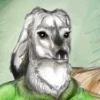 Story by Cederwyn Whitefurr on SoFurry
They created K-17 because they could.
Nobody asked K-17 if they should.
For three years, Subject K-17 endured the needles, the straps, the cold clinical hands — an experimental hybrid treated as nothing more than proof of concept. But the scientist responsible for its creation begins to see what the data has been telling him all along, and everything starts to unravel.
“Subject K-17”
© Cederwyn Whitefurr
July 2026
Authors Note: Inspiration for this story come from a Telegram Writing Group, and the person who gave me this seed is Patih, much love to you for this 'inspiration' :)
Prologue:
_They created K-17 because they could.
Nobody asked K-17 if they should._
For three years, Subject K-17 endured the needles, the straps, the cold clinical hands — an experimental hybrid treated as nothing more than proof of concept. But the scientist responsible for its creation begins to see what the data has been telling him all along, and everything starts to unravel.
* * *
Chapter One: Origin
For more than a decade the question had echoed in boardrooms and laboratories: Just because we can, does that mean we should?
It was asked less and less as the years passed. The sequences existed. The technology was ready. The funding appeared. And so the work continued.
Subject K-17 was the result.
Human stem cells and marsupial genetic material were coaxed together in a dish. The cells divided, formed an embryo, then something stranger than either parent species. It grew inside a sterile artificial pouch — a fluid-filled chamber of plastic and sensors, fed by machines that mimicked a mother’s body but offered no warmth, no scent, no heartbeat.
When she finally opened her eyes under harsh clinical lights, the first thing she saw was gloved hands reaching for her.
* * *
Chapter Two: Observation
Dr. Adrian Lang told himself the same thing every morning when he entered the containment wing.
This is Subject K-17. An experiment.
Every morning, he repeated these words that had become his mantra, a ritual. They were a shield against the small, russet-furred figure that watched him from the corner of the sterile observation room.
The first six months were the hardest. K-17 required scheduled feeding, a precise volume of milk-replacer delivered through a bottle he alone administered. Other technicians handled the blood draws, measurements, and cognitive tests. But the feeding was his.
He sat on the low bench while she clung to the bottle with both clawed paws, her dark eyes fixed on his face the entire time. He never spoke beyond the clinical notes he recorded afterward. Never sang. Never lingered once the bottle was empty.
Everything was filtered through data.
Feeding was nutritional intake. Learning was cognitive scoring. Play was enrichment testing — brightly coloured toys and puzzle feeders introduced under timed observation. Curiosity was a behavioural metric. Fear was a stress hormone spike to be logged.
Every week they strapped her small body to the cold metal table. Gowned technicians moved around her with impersonal efficiency while she trembled and made soft, distressed sounds in the back of her throat. Bright lights bored into her eyes. Needles slid into veins. Then she was returned to one of the two identical sterile rooms that made up her entire world — white walls, filtered air, no windows, no sunlight, no scent of grass or eucalyptus.
Later, Lang watched the footage with professional detachment. He noted how she began to favour certain toys. How she solved the puzzle feeders faster each time. How her tail curled around her body when the technicians left and she was alone again.
Attachment behaviour, the logs said. Promising signs of higher cognitive adaptability. Exactly as predicted.
No one ever sat with her and simply asked, “Can you talk?” No one ever stayed after the lights dimmed to see what she might say if given the chance.
Lang told himself it wasn’t his place. His role was to oversee. To record. To ensure the project produced usable data. The hybrid body was developing beautifully — feral grace in the limbs, the beginnings of strong tail control, the protective pouch forming as expected. The mind behind those dark eyes was clearly active, watchful, learning.
But she was still Subject K-17.
And every evening, when he performed the final bottle feed of the day, she would press her cold paws against his hands and look up at him with that same quiet, expectant intensity she had shown the day her eyes first opened.
Lang always looked away first.
* * *
Chapter Three: Joey No More
Weaning was not a choice. It was forced upon K-17.
At the scheduled time the bottles simply stopped. K-17 had no say in the matter. She was Subject K-17 — an experiment whose nutritional needs had been recalculated. When she cried and pawed at the empty space where the bottle used to be, the technicians logged it as “expected separation distress” and moved on.
Further tests followed.
Agonisingly bright lights were shone directly into her eyes. Sudden, deafening sounds blasted from hidden speakers. She flinched, trembled, and made soft distressed sounds that were duly noted. Blood draws continued weekly.
At one year old, the team decided more invasive sampling was required.
The procedure was logged as “Pouch and Reproductive Viability Assessment.”
She was strapped to the cold metal table as usual. Gowned figures moved around her with clinical detachment. Gloved fingers forced their way into her pouch without warning or gentleness, spreading it open to examine the developing teats. She squealed — a high, primal sound of shock and violation. The hands did not pause.
Then came the instruments.
Cold metal probes and scraping tools slid inside her. K-17’s scream tore through the room. It was not anger. It was pure, instinctive terror. Her left paw lashed out blindly, claws raking across the nearest technician’s forearm and opening a long, bloody gash.
Alarms sounded. Someone called for the tranquilliser.
The last thing she saw before the sedative dragged her under was Dr. Adrian Lang watching from the observation window.
He looked disappointed.
When she woke, the world had changed.
Her enrichment toys were gone. The puzzle feeders and soft blankets she had come to expect were removed. Even her meals were reduced — enough to sustain her, not enough to comfort. For two full days Dr. Lang did not return. No one explained why. No one spoke to her beyond the bare minimum.
She huddled in the corner of the smaller sterile room, shaking uncontrollably. Her pouch ached. Her body felt wrong in ways she had no words for. For the first time, the fear was deeper than pain or bright lights. It was the cold terror of abandonment.
She had done something wrong. She didn’t know what. She only knew that the one consistent presence in her world had looked at her with disappointment… and then stayed away.
Punishment had been delivered.
K-17 simply did not understand why.
* * *
Chapter Four: Reconciliation
Dr. Adrian Lang returned on the third day.
K-17 was already trembling when the door hissed open. Exhausted and hollow with fear, she lifted her head. The moment she recognised his scent and footsteps, she crawled forward on all fours, tail dragging, paws reaching desperately for the only living thing she had ever known.
He turned away before she reached him.
A small, high chattering distress call escaped her — the unmistakable sound of a joey calling for a mother it had never truly known. It echoed thinly in the sterile room.
“K-17,” he said coldly, still facing the door. “Stop.”
She froze. Her ears pinned flat.
“I will not comfort you. You are an experiment, K-17. A hybrid. You are not—”
A small paw brushed the back of his lab coat, then another, clinging gently. Not tearing. Just holding on.
Lang stood motionless for a long second. Then he turned.
She dropped instantly, crouching low in submission, uttering a series of soft, nervous coughs. Her whole body trembled against the floor.
No. This cannot be right.
He crouched slowly. “K-17. Stay. Look at me.”
She hesitated, then lifted her head. Dark eyes met his.
His pulse quickened.
“K-17. Come.”
She crept forward on her belly, low and submissive. When he held out a small treat in his open palm, she froze, waiting for permission.
Lang’s voice softened, almost against his will. “You may eat.”
She took it gently with her lips and tongue, chewing with her head still bowed, ears half-lowered. Waiting. Hoping.
Dr. Adrian Lang remained crouched, watching the small hybrid who had just proven something far more dangerous than any fertility test could reveal.
She wasn’t just responding to commands.
She was understanding.
* * *
Chapter Five: Exposure
K-17 endured the tests because she had no choice.
They darted her when she resisted. They sedated her until the world dissolved into blurred shapes and mechanical beeps. Strapped to the cold tables, she drifted in a drugged haze while gloved hands moved over her and machines chirped in languages her young mind could not understand.
Through it all, Dr. Adrian Lang conducted his private studies.
Each day brought new puzzles: levers to push, shapes to match, objects to retrieve. Success earned a treat — but only after explicit permission. “K-17, fetch the red block.” She would scan the room with wide dark eyes, crawl to it, grasp it awkwardly, and return it to his hand. Only then would he reward her.
Obey. Submit. Receive.
By eighteen months she was no longer a small joey-like creature. She had grown taller and stronger, her limbs more coordinated, her thick tail more expressive. Still far from adult size, but unmistakably changing.
One morning Lang fitted her with a leather collar, then a custom halter. The buckles terrified her at first, but she had already learned the cost of resistance. Within a week she no longer flinched when he fastened them.
Then came the day nothing in her narrow world had prepared her for.
Lang clipped a lead to her halter and led her down the corridor toward a set of heavy glass double doors. K-17 walked at his left hip on all fours, as conditioned. When they reached the doors her ears flicked forward, then pinned flat. She planted her paws and pulled back against the lead.
Beyond the glass lay chaos.
Sunlight. Real sunlight. Vast open space, movement, colour, and sounds her sterile rooms had never contained.
“K-17. Come,” Lang said firmly, giving the lead a steady pull.
Her body shook. Every instinct screamed to retreat to the safety of white walls and familiar scents. But the memory of two days of empty bowls and crushing silence was sharper.
Fearfully, K-17 obeyed.
She crawled through the doors and into the courtyard, heart hammering, eyes darting at every shadow and sound, staying glued to the only anchor she had ever known.
* * *
Chapter Six: Conflicted
K-17’s heart thundered in her throat.
The moment she passed the glass doors, the world attacked her. Invisible winds ruffled her fur in strange, unpredictable directions. Her eyes rolled white, head snapping left and right as sights, sounds, and scents overwhelmed her young senses. A low, instinctive coughing rattled in her chest. Panic took hold — she lunged sideways and clawed desperately at Dr. Lang’s leg, seeking any anchor in the chaos.
“K-17. Stop,” he snapped.
She dropped instantly, crouching low, ears pinned flat, body trembling violently.
Lang felt an unwelcome pang twist in his chest. He glanced around to confirm the courtyard was empty, then crouched and gently took her quivering paws in his hands.
“Easy, K-17,” he murmured, voice lower. “This is outside. Fresh air. Birds. Scents… I can only imagine what they must be like for you.”
He plucked a small handful of grass and held it to her muzzle. “Grass. Green. Your kind eats this.”
K-17 recoiled at first, eyes still wild. Then something else caught her attention. She looked past him to the polished glass doors, then back at him, then to the glass again. Her ears flicked forward.
She stared.
For the first time in her life, K-17 saw herself — a russet-furred hybrid with wide dark eyes, long ears, a strong tail, and the leather halter and collar marking her as property. Her mouth fell open in a small, stunned expression. The grass in Lang’s hand was forgotten.
She remained frozen, gaze locked on the frightened stranger in the glass who looked exactly how she felt inside.
* * *
Chapter Seven: A Moment of Warmth
Dr. Lang released her paws gently and stood, turning back toward the glass doors.
K-17 remained crouched, one ear twitching, then the other. She saw it again — the other version of him standing right beside the real one. She looked up at the solid, warm-scented Dr. Lang she could touch and smell… then back at the impossible duplicate in the glass.
It made no sense.
“K-17, it’s alright,” he said carefully. “It can’t hurt you. That’s a reflection. It’s what you look like… what I look like.”
She stared a moment longer, ears flicking in confusion.
“Come. This is enough for one day.”
He placed a steady hand on the back of her neck, just above the collar. Without command, without force — for the first time — K-17 leaned her head against his hip. A small, trembling press of warmth and trust. Her first truly voluntary act of seeking comfort.
Dr. Adrian Lang froze.
His hand paused on her neck. For several long seconds he simply stood there, feeling the light weight of her head resting against him, her body still quivering from the overwhelming newness of the outside world.
He noticed.
He noticed far more than he wanted to.
* * *
Chapter Eight: Growing Closer
Six months had passed since that first terrifying trip beyond the glass doors.
Outings had become routine. K-17 lay sprawled in a warm patch of sunlight in the courtyard, dozing fitfully while Dr. Adrian Lang sat on the low bench beside her, leash held loosely in one hand as he scrolled through a paper on his tablet. She had nearly reached her full growth — sleek russet fur, powerful tail, strong limbs — though she remained noticeably smaller than a natural red kangaroo doe. The team had deliberately engineered a more manageable size.
A fly landed on her muzzle and crawled lazily toward her nostril.
Without warning, K-17 grunted. Her leather-padded paw flashed up with surprising speed and smacked the insect. Dr. Lang startled at the sudden movement.
She snorted, snapping instantly from drowsy half-sleep to full alertness. Pushing her upper body upright, she scanned the courtyard with large dark eyes, ears twitching in every direction, nostrils flaring as she tested the air.
Unexpected behavioural response to external stimuli, Lang noted mentally. Most unexpected.
K-17 rose, gave herself a full-body shake that rippled from shoulders to tail tip, then crouched low and looked up at him expectantly.
Lang kept his eyes on the tablet, deliberately ignoring her for several long seconds.
Eventually a trembling paw came to rest on his thigh. Then her chin followed, pressing lightly against him as she huffed — a soft, seeking sound — and closed her eyes.
Dr. Lang blinked. After a moment he reached down and stroked the back of her head, then along the side of her neck. The barest hint of a smile touched his lips.
Good, he thought. K-17, your behaviour is remarkable.
* * *
Chapter Nine: The Gift
Back inside the familiar sterility of the larger observation room, K-17 moved with quiet purpose.
She rummaged through her blankets and toys, grunting softly, until she found the small colourful block she had always favoured. She glanced at Dr. Lang, then lifted the edge of her pouch and slipped the block inside.
Only then did she drop to all fours and crawl over to him.
She laid her head gently on his lap, large dark eyes gazing up. Lang remained impassive, tablet in hand, deliberately looking away just enough to test her.
K-17 chuffed — a soft, uncertain sound. She reached into her pouch, retrieved the block, and carefully placed it on his lap.
Dr. Lang stared at the small, brightly coloured object.
A gift. Given freely. Without command. Without promise of reward.
K-17 kept her head resting on his lap, watching him patiently.
* * *
Chapter Ten: A Quiet Gift
Dr. Lang blinked, then picked up the small block and looked at her.
He moved as if to toss it back across the room.
K-17’s ears snapped flat. Her eyes filled with an expression he had never seen before — genuine worry and confusion.
“K-17… you gave this to me?” He frowned, glancing between her and the block. “You want me to play with it? Do something with it?”
She blinked, then shook her head slowly. Her paws rose and gently pressed against his hand, guiding it back toward his belly.
Lang froze.
Is she… pushing my hand back? Does she want me to hold it?
He sat very still, the small colourful block resting in his palm, mind racing, while K-17 watched him with quiet, hopeful eyes.
* * *
Chapter Eleven: First Refusal
A month later, K-17 followed a few paces behind Dr. Lang through the corridors, no halter or leash required. She had learned to stay close on her own — quiet, careful. Some doors still made her flinch and press against the wall. She remembered what waited beyond them: sedation, cold tables, blinding lights, and pain.
This time Lang took her further than ever before. He pressed his pass card to a locked door, held it open, and waited.
K-17 froze the instant her paws touched carpet.
She coughed sharply and clung to his thigh, trembling.
“Easy,” Lang sighed. He crouched and placed both hands on her shoulders. “It’s alright. It’s just carpet. It won’t hurt you. Touch it. Smell it if you want. It’s… soft, like your fur, isn’t it?”
She blinked, brow furrowed in deep concentration. Slowly, cautiously, she trusted him enough to try.
Lang moved to the large dark brown desk and sat down. K-17 followed, sniffing cautiously at its edge before jerking back and sneezing. She wiped at her nose with both paws.
I should have stopped her—
The thought struck him like a slap. I should have stopped K-17… not her.
He slammed his hand down on the desk.
K-17 let out a sharp, frightened vocalisation. In one powerful bound she was across the room, crouched low against the far wall, ears flat, body shaking.
“K-17,” Lang sighed. He rose and crouched halfway toward her, hands held out. “It’s alright… come.”
With a series of anxious grunts and coughs, K-17 violently shook her head.
For the first time in her two years of life, she refused to obey. Her eyes and posture made it unmistakable: she was terrified, overwhelmed by the new room and the sudden noise — and she was choosing to stay right where she was.
* * *
Chapter Twelve: A Line Drawn
Dr. Lang sighed, hating the way his own outburst had terrified her.
He opened a drawer in his desk, keeping his eyes carefully averted. Slowly he slid the small colourful block out, rose, and took two careful paces toward her.
K-17 backed hard into the corner. Paws raised, claws curled, she grunted and growled — a low, defensive sound.
“K-17? It’s alright. You’re safe. I’m here… look.”
He knelt, deliberately lowering his gaze, and held the block out in one open palm. “This was yours. One of your favourites. You gave it to me. You wanted me to have it. Do you remember?”
For a long, tense moment she held the rigid, threatened posture. Then, slowly, she began to calm. Her eyes fixed on the small wooden block in his hand.
Timidly, still showing every sign of fear in her lowered posture, K-17 crawled forward. She stopped close and looked from the block to him.
“Good… good,” he murmured, holding it steady. “You want it? Go on, take it. It’s yours.”
K-17 frowned. She shook her head and once more used both paws to gently push his hand — the one holding the block — back toward his body. Then she glanced at the office door, then back at him, that same worried expression returning.
“You want to go back to your room?”
She blinked, tilting her head in clear confusion.
“Home,” Dr. Lang said quietly. “Safe.”
K-17 blinked again. Her frown deepened as she looked at the door, then back at him.
* * *
Chapter Thirteen: K-17 Remembers
Dr. Lang took her back to her room.
K-17 immediately moved as far from him as the space allowed and lay down, large expressive eyes fixed on him. She barely breathed, but she never blinked.
Traumatic induced fear response noted in Subject K-17. I may have pushed too hard. She… K-17 is only two years old. Cognitive estimations didn’t account for these developmental quirks. Subject showed aggression under stress… offered item of significant meaning, then refused it, pushing my hand back as if— This is not behavioural expectation.
“K-17?” he asked quietly. He sat on the floor instead of the chair, hugging his knees to make himself smaller. “Here. Safe. Home?”
K-17 sat half-upright, then coughed and violently shook her head.
Lang felt every assumption he had built begin to crack.
She understands more than we realised. How can this— Were our methods and assumptions wrong all this time? She was meant to be higher-functioning, not… Then our model is wrong. No. It can’t be true… K-17 is… an experiment. There is no scientific way she can be truly sapient.
“K-17, here. Safe. Home. Do you understand?” he tried again, feeling foolish.
K-17 rose. She snorted and shook her head more violently. Then she did something he had never seen.
She held one forearm out and awkwardly pressed her claws against it. She repeated the motion three more times. Then she twisted and began slapping her left hip. Forearm. Hip. Forearm. Hip. Finally, exasperated, she stamped one long foot paw, collapsed dramatically onto her blankets for a moment, then rose and stared at him.
The fog in Lang’s mind cleared with horrifying clarity.
She was showing him the darts. The blood draws. The straps. The tables.
He sat pale and silent as the pieces fell into place.
“Home? Safe?” he asked gently.
This time K-17’s response was emphatic. She growled, stamped her foot, and turned her back on him completely.
Your point is made, K-17… he thought sadly.
* * *
Chapter Fourteen: The Board
Dr. Lang stopped running tests.
Instead, he brought in the board.
It was simple — a sturdy panel with large, raised tiles she could press easily with her paws. Only ten words:
K-17 Lang Want Yes No Scared Hurt Food Outside More
He sat on the floor and showed her how it worked, without rewards, without pressure. He pointed to himself. “Lang.” Pointed to her. “K-17.” Pointed to a bowl. “Food.”
No demands. Just communication.
K-17 watched him for days with wary, half-pinned ears. She sniffed the board, pawed at its edges, but left it untouched.
Then one afternoon, after a technician had come and gone and left her tense and flinching, she walked over on her own and pressed two tiles.
K-17 Scared
Lang went very still.
She had chosen to tell him. No one had asked. No one had prompted her.
In the weeks that followed she used it more and more. One evening Lang left her favourite colourful block on a high shelf without thinking. K-17 approached the board and pressed:
Lang Block
Not a request for food. Not a response to a cue. A clear, deliberate direction of his attention.
He brought the block down and placed it in her paws. She held it for a long moment, then looked back at the board.
K-17
She padded over again, pressed the tiles slowly and carefully, then lifted her eyes to his and waited.
Not Home. Lang Safe.
* * *
Chapter Fifteen: What We Created
Six months had passed.
Dr. Adrian Lang stood at the head of the long table in the brightly lit meeting room, hands braced on its surface. Around him sat the senior researchers who had helped create Subject K-17.
“I’m not taking K-17 to the symposium,” Lang said flatly. “She is not ready. K-17 is terrified of strangers, of bright lights, of loud voices. You all know this. Forcing her into an auditorium full of people is cruel.”
One of the senior geneticists leaned back. “This is an incredible breakthrough, Adrian. The first viable human-marsupial hybrid. Our peers need to see the subject.”
“K-17 is not a specimen to parade around,” Lang snapped. “She is—”
He stopped, catching himself.
Lang swallowed hard. “K-17 is not ready.”
The room waited.
He exhaled slowly, voice quieter but no less firm. “I will not put K-17 on a stage like some trained animal just so we can pat ourselves on the back.”
A heavy silence fell.
Dr. Patel, the lead on cognitive studies, folded her hands. “You’re the one who developed the speaking board, Adrian. You’re the one who showed us she can use it. And now you want to hide her away?”
“I want to protect her,” Lang said. “Because for the first time since we created K-17, I’m treating her like what she actually is — not an experiment. Not data. A living, thinking being who didn’t ask to be made.”
He looked around the table at the faces of people who had once been his colleagues in the same cold work.
“I’m not denying what we’ve achieved,” he continued. “I’m finally acknowledging what we created.”
No one spoke for several seconds.
Dr. Patel broke the silence first. “Then perhaps,” she said carefully, “it’s time the rest of the world saw what you already see.”
Lang closed his eyes for a brief moment.
He already knew he had lost.
* * *
Chapter Sixteen: K-17’s Words
The scientific symposium was everything Dr. Lang had feared. And it terrified K-17.
Hundreds of strangers filled the auditorium. Harsh lights glared down. Cameras clicked and whirred. The air was thick with overlapping voices and alien scents. K-17 shook violently and pressed herself against Dr. Lang’s side, trying to disappear behind him, the halter tight around her shoulders.
Lang kept one hand on the back of her neck, steadying her as best he could. His own heart hammered.
“K-17,” he murmured, guiding her toward the low platform where the speaking board waited. “It’s alright. Show them. Say your name. You can do this.”
A ripple of laughter spread through the crowd. Someone muttered about a petting zoo at a serious science conference.
K-17 trembled, ears flat. For a long, painful moment she simply hid against his leg. Then, with painful slowness, she crept forward and touched one tile.
K-17
Laughter grew louder. Jeers broke out.
“Come on, it’s just a well-trained animal!”
“This is a symposium, not a circus!”
Lang’s jaw tightened.
K-17’s ears pinned back. She stamped one powerful foot paw, clearly upset. Then she began touching the tiles rapidly, unprompted.
K-17 Scared Lang Safe Kind K-17 Lang Master
The hall fell into stunned silence.
She was speaking - choosing her own words, her own message - out of fear, trust, and the desperate need to be understood.
Lang stood motionless beside her, one hand still resting lightly on her neck, as the weight of what she had just done settled over the entire room.
* * *
Chapter Seventeen: A Word Spoken
Rumours, accusations, and bitter arguments tore through the scientific community for months. Some hailed K-17 as a true hybrid breakthrough. Others dismissed her as a well-trained animal. Media outlets sensationalised every leaked detail. Religious groups protested. Public opinion swung wildly between fascination and outrage.
Dr. Adrian Lang had finally had enough.
He ordered all experimentation on K-17 to cease immediately. The others hadn’t been the ones to hold her afterward. They hadn’t felt her body shake with silent sobs or seen the way her eyes grew wet with tears she had no other way to shed.
By then, he had long since stopped thinking of her as an experiment.
As lead scientist on her creation, he had final authority. The morning after yet another round of invasive procedures, he comforted her as best he could, then brought her with him to the main conference room. Staff drifted in, curious about the unscheduled meeting.
Lang played his final card.
He offered his resignation on the spot.
“The experimentation on K-17 will cease,” he said, voice low and final. “She—” He glared across the table. “—has far surpassed every projection we made. This is not an experiment. This is a sentient, living, breathing person in her own right.”
The CEO rose. Lang’s dark eyes locked onto him.
“Sir, with due respect… either you accept my demands, or I walk. And K-17 walks with me.”
K-17, growing increasingly upset by the rising tension and hostile scents in the room, clawed gently at his coat.
“K-17, not now—” he growled.
She persisted.
At last he crouched, taking her paws in his hands and looking into her eyes. K-17 looked back, her own eyes shimmering, body trembling. Then, in a quiet but unmistakable voice, she lifted her head, ears swept back, and said the only word that had ever truly mattered.
“…Father?”
Silence fell. None of them could pretend they had not heard it.
- FIN -