Tales of Morveria: Cold
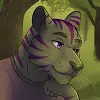 Story by Mantrid_Brizon on SoFurry
In the Enlightened Period, approximately 112 EP, a Hitrosii is sent from behind the great crystalline wall of his city-state to explore the world of the humans. The silver-skinned elven male takes notes of all that he sees as he journeys into the heart of the nearest kingdom, gleaning knowledge for his people and making his assessment. Follow him on the journey, glimpsing humanity from his eyes, our pain and our passions, and perhaps reflecting on the words within.
Note: This story is vital for building lore, which will be referenced in future stories as if you've read this from start to finish.
Tales Of Morveria: Cold
A Hitrosii’s Report on Humanity
By Mantrid Brizon
After several millennia of relative calm, unsettling news of the Yasheriit’s progress has reached the Grand Dominion. Though they’re naught but primitives, they eventually mastered the art of smelting and shaping bronze. As an inferior metal, little attention was given to this development and these creatures were ignored by the Coalition of Hitrosii. However, reports began to emerge detailing the Yasheriit’s subjugation of the even more primitive bipedal beasts, primarily the Vostii, Korutan and Sabaarii.
While a concern, this too was ignored, as how could these primitives ever rise to challenge the might of the Coalition of Hitrosii? Lately, however, new reports of the Yasheriit’s development have left the Grand Dominion with increasing concern. Somehow, they’ve learned to smelt and craft with iron, and potentially steel. Clearly, their development has advanced to a level we did not foresee. Action must be taken. It was for this reason that I, Voletrynu, was chosen to act as scout and emissary.
For nearly three seasons, I traveled outside of the great crystalline wall which protects our magnificent city-state of Nepriat to see what dangers the Yasheriit posed. I was to walk amongst these strange creatures and assess their strengths, weaknesses and what threat they pose to the Hitrosii race, if any. The following is my report, which I have segmented for clarity.
Early Travel & First Contact
After being brought before the Grand Dominion, who instructed me on my mission and for which I was most grateful, I began my journey, post-haste. I packed only the most basic of resources; food rations, a water purification crystal, igniter, and for defense, I chose to bring only the gauntlet. Though the Coalition of Hitrosii have no use for currency, as all are sustained by the state, I thought it best to bring a cache. I’d been told by the scouts that the Yasheriit, who like to call themselves “humans”, still barter for goods and services, rather than living as a collective, as we do.
Before departing, I learned that the Yasheriit trade in coinage minted from precious metals. Truly, they are primitives. Coins of gold and silver were crafted for me, their form copied from currency collected by our scouts. With a satchel full of unbearably heavy coins, I made my way from the safety of Nepriat’s great wall, in search of the nearest Yasheriit civilization. In order to familiarize our collective, I will henceforth call them their preference of “human”. Our scouts honored me with a map, which detailed the furthest they’d traveled.
Beyond that, I would walk without confidence, the first Hitrosii of our city-state and perhaps even any city-state to venture so far. I will admit to being unsettled - traveling into the unknown will shake many to their core - but as a loyal member, I would do anything for the collective. I walked for many miles, until I’d passed the reach of our glorious civilization. The wilderness was vast and harsh, and on my second night, as I struck a fire with my igniter, a beast emerged from the vegetation and charged me. Low to the ground and with a menacing set of four tusks, I fell the creature with a blast from my gauntlet.
The potent electrical discharge set its fur alight, and the purple bolts caused its muscles to seize. To preserve my rations, I endeavored to cook the beast. I was saddened that I couldn’t bring it back to the collective, for distribution amongst the people. I cured the majority of the meat, then ate my fill. This proved a wise decision, as after walking for many days and nights I’d exhausted all of the meat I’d saved, as well as a large portion of the provisions I’d packed. It was at that moment I’d wondered if I would ever see one of these “humans” in the flesh. At that moment, a stranger appeared.
They rode on horseback, seemingly in sync with their beast. It was a scene as startling as it was intriguing. They commune with the lowest animals with surprising capability, something that could favor them in combat. The human male spoke to me, startled by my appearance. Having learned their carnal speech in preparation for journeying beyond our walls, I quickly deciphered the creature. He marveled at meeting an “elf”, which is apparently a word they’ve come to associate with us.
I bit my tongue so as not to offend the primitive, who carried a sword made of iron and wore a wooden bow across his torso. I hadn’t seen one in so long; it took me a moment to recall what it was. The stranger introduced himself, though I have since forgotten his name. When questioned about my intentions, I made it clear that I was an ambassador for our people. The human was astonished, dismounted his horse and approached me. I prepared to use the gauntlet, but he was a friendly sort, and asked if I was eager to meet their lord.
Apparently, they use a system of government which we long ago abolished, a series of lords and wealthy barons who report to a great king. I told this human that I was curious about his people and eager to meet his lord, and so the human offered to take me to his “city”. This city was little more than a hovel of stone and mortar, though the poorer amongst them live in whitewashed homes made of wattle and daub. They walked on streets made of dried bricks and their quadrupedal animals roamed freely. Several men earned their keep by cleaning up after these animals with shovels and buckets.
I was shocked to learn that, unlike our system, these humans have private property, and seemed to greatly enjoy ownership. They bartered in their coinage and argued over who owned what. I see now why the Grand Dominion saw fit to abolish private ownership. Furthermore, they worship a pantheon of gods and goddesses. It amused me to witness them praying to men and women who live in the sky. Perhaps one day they will evolve and learn that there is nothing but our reality, as the Grand Dominion has explained?
I was led through the village and toward the wealthier portions, and it was at this time that I began to notice something peculiar. As the reports had indicated, these humans do indeed claim ownership over the races of bipedal beasts, most of which have been subjugated by them. However, my guide told me in passing that many more of the creatures still live primitively in the vast wildernesses, much of which they have yet to tame. Interestingly, there were no Peryava or Uvanii to be seen; the flight-capable bipedal beasts have more or less been displaced by human expansion, but not tamed.
None of this was a surprise to me, as our scouts had reported as much. What surprised me was how the subjugated behaved. Some of the Vostii, Korutan and Sabaarii I’d seen were clearly miserable, likely enduring mistreatment by their human masters. However, the vast majority appeared rather contented to be in the company of their humans. In many ways, they seemed to be cohabitating. Though treated as lesser to the humans and made to wear collars with tags, and sometimes led by leashes, their masters had a polite and endearing manner, if that can be believed. They showed concern for their bipedal beasts, an action that somehow earned the respect and admiration of the subjugated.
Dare I say, many of these bipedal beasts appeared to enjoy their lives. Of special note are the Korutan, who appeared to absolutely relish their subjugation and gleefully followed their humans, oftentimes without the need for leashes. In a few instances I’m positive I saw a deeper connection between the humans and the bipedal beasts of the opposite sex. While our scouts were not wrong, they utterly failed to describe the dynamic I’d witnessed. Perhaps it was a lack of subjects to study or perhaps they merely made assumptions based on presupposed behaviors, gleaned from past encounters?
In any event, we greatly underestimated the bonds that many of the humans and their bipedal beasts have. With their aid, and I’m certain they would offer it freely for their masters, the humans could mobilize a force unlike anything we have ever seen before. Continuing on my journey, I reached their lord’s “castle”, a stone fortress made of large bricks and held together with mortar. A gate made of blackened iron protected the entrance. Clearly, they’ve been using the material for longer than we had anticipated.
Though they were clearly enthralled by the sight of an “elf”, the guards still halted our entry. Clad in iron plate armor, carrying simple pikes and wearing swords on their hips, they looked like curiosities from our distant past. In a strange way, I found it rather charming. It was not long before a man in finer garments appeared. He claimed to be the “chamberlain”, in service to his lord, who I was told was a lesser “noble” for an even greater kingdom. I asked to speak to his master, on behalf of the Grand Dominion, and he was quick to lead me.
My original guide was promptly abandoned at the gate and paid a gold coin for his service, for which he was exceedingly grateful. Upon gaining entry to the castle, I learned that these structures double as both a military fortress and a palace. I was intrigued by the remarkable craftsmanship of the wooden doors and the patterns in the intricately weaved rugs. While not as aesthetically pleasing as our own crystal growth, it has a quaint charm; the humans are capable of a higher degree of craftmanship than we’ve given them credit for.
I was introduced to a surprisingly youthful man with blonde hair and blue eyes, features that made him stand out amongst the other humans, many of whom have brown or black hair and brown or green eyes. Admittedly, I often struggle with the subtle differences in their appearance. He rose from a throne and approached me, took hold of my forearm and gently shook it in some strange, customary greeting. He said his name was “Eberluz”, and waited for me to speak. After introducing myself, he asked why I was there, remarking truthfully how rare it is for his kind to meet with an “elf”.
I explained my purpose in a manner that seemed as non-threatening as possible, hoping to lull him into confidence. He promptly ignored my statements to marvel at my height, eyes, skin tone and hair coloration, then abruptly asked me how our women appeared. I could tell from his tone and demeanor that he was expressing a sexual curiosity. This startled not only myself but the woman who sat nearest him. She rested a hand over her face and promptly berated him for his perversions, to which he gave a peculiar retort.
While still looking to me, he told me not to mind her for she is still frustrated about never regaining her youthful figure after birthing his heir. This caused her to erupt in anger, and I proceeded to stand by and witness the debacle. As Eberluz and the woman shot insults back and forth, I turned to the chamberlain and inquired about them. I learned that the woman is “Azell”, Eberluz’s “wife”, a title granted to females partaking in a custom of mutual ownership and sexual exclusivity between adults of breeding age.
Why they bond themselves and not simply breed when the state requests a population increase is beyond my comprehension. After a particularly cruel insult involving the weight of her buttocks and breasts, Azell stormed off and Eberluz merely chuckled. He turned his attention back to me and asked if I’d come to make some sort of alliance with their kingdom. Though amused by this proposition, I was horrified when he remarked, rather off-handedly, of their war with a neighboring kingdom. I was greatly alarmed to hear that there was more than one.
Though I asked about the number of kingdoms, on this Eberluz was reluctant to speak. He looked me up and down with great suspicion and I began to worry that he thought I was a spy and not an emissary for the Grand Dominion, which, depending on your point of view, could be true. He told me that he would let his master decide what my purpose was, assuming I didn’t “flee behind those crystalline walls.” His insinuation of cowardice was but a minor irritant. He offered me a place to stay, and I told him that he could be compensated.
However, he refused payment, considering it his duty to see me through my quest to meet his king. He said he was bound by “honor”. I did not understand and this was clear to him, so he explained the concept. It’s an odd and perplexing custom, indeed, serving only a needless and convoluted metaphysical purpose. I relented, upon which Eberluz offered me food and shelter until preparations for my transport could be arranged. I joined them and witnessed a level of decadence that I hadn’t expected. In contrast to the abject poverty of the “peasants”, their name for the common citizens who live beyond the castle walls, I found myself repelled by the extravagance of the “nobles” within.
After feasting with the humans and enduring a myriad of the most inane questions imaginable, all of which I skillfully deflected, I noticed something peculiar. Eberluz stared at a particular servant girl, a rather scrawny Vostii of the rabbit-kin. She saw his gaze, as did his wife, and while the bipedal beast woman was obviously receptive to him, his human mate was less than pleased. After this feast, I witnessed Eberluz taking the Vostii by the wrist and leading her away. Azell appeared very upset by this and turned to the chamberlain for comfort, which he appeared happy to provide.
Somehow, after a brief period of delay, I managed to slip away without being noticed. As I walked the halls in search of Eberluz and his servant, I heard disturbing but familiar sounds coming from one of the rooms. Listening carefully, I noted them as the sounds of carnal passion; the moans of a female enjoying the pleasures of a man, and the grunts of a man as he prepares to inseminate a female. Just to be certain that this was the lord and his servant, I picked the childishly simple lock and carefully pushed the door open.
Peering inside, I discovered that the room was a bedchamber. Indeed, I found Eberluz and his Vostii, whom he’d placed on all fours and mounted like a beast. He thrust himself into her again and again, with the ferocity of an animal. She appeared to greatly enjoy it. He brought her to orgasm only to finish moments later, spilling his seed deep inside of her. It struck me as odd, considering that nowhere did I see a single half-breed, yet we know through our research that the lessers can interbreed with varying degrees of dilution in their blood.
I wondered if they also understood the value of neberum. If so, that would mean they have a comprehension of chemistry beyond what we expected, a knowledge that, if cultivated, could produce much more useful weapons. After slipping away unnoticed, I stumbled across the chamberlain and inquired about what had occurred. He apologized profusely and admitted that Eberluz has a particular taste for the flesh of females. I asked him what male didn’t, which he treated as a jest in poor taste. He remarked that I was fortunate for my gender, as Eberluz might have otherwise “acted rashly”. He did not elaborate.
I inquired about Eberluz and his Vostii servant, to which he revealed that she was but one of many, and that tomorrow Eberluz might find another worthy of his “pleasure chamber”, as that particular room is apparently called. As he spoke, I could tell that he did not appreciate his lord. Clearly, these humans do not have undying loyalty to their masters, as we Hitrosii do to the Grand Dominion. As if to continue berating his lord, the chamberlain explained that Eberluz wasn’t even smart enough to force the use of neberum on his servant girls. The humans possess at least an infantile understanding of chemistry.
Because of Eberluz’s thoughtlessness, many find themselves with child. As the bipedal beasts are quite primitive and seek the best mates - though a human is but a marginal improvement - they’d still be delighted to become pregnant by one of his standing. I remarked about Eberluz’s foolishness, and his chamberlain agreed, taking this next opportunity to condemn his lord even further. Apparently, in this particular kingdom, the slaying of half-breeds isn’t customary, as it is in many others. I was surprised to learn that the humans feared the hybrids, as we know that hybridization could only ever make the child inferior.
The chamberlain failed to say how many other kingdoms there were, and when I asked, he avoided answering. I could tell that there was a reluctance, as the humans are not accustomed to dealing with Hitrosii; their distrust is as palpable as their curiosity. He promised that if I waited until Eberluz was in the appropriate mood, his lord would sit with me properly and discuss my mission and travel arrangements to his master, the “king”, who lives a considerable distance away, in an entirely different region of Morveria. I agreed to wait, and so I was given a bedchamber.
While the furnishings were primitive by our standards, the humans make a comfortable mattress, and I was able to sleep in relative peace. However, I never removed my gauntlet, in the event an assassin came into my room whilst I slept. While there were no attempts on my life, I was awoken during the night to a strange laughter. Moving toward the door, I peered into the hall only to find Azell and the chamberlain standing a few doors down. She made it clear that they shouldn’t be doing whatever it was they intended, but he grabbed her by the waist and kissed her.
After whispering his affections for her and how she deserved a better man, comments which I was easily able to detect with our superior hearing, she relented. He opened her dress, exposing her breasts, before gently pushing her into the room. Shortly after they disappeared into the bedchamber, I heard them fornicate for nearly an hour. To his credit, Eberluz’s chamberlain lasted far longer than he. It seemed clear to me then that the humans are quite carnal, eagerly mating with whomever suits them, despite their culturally significant rituals of ownership and sexual exclusivity.
Perhaps their ruling class are permitted more freedoms than their underlings? In any case, considering these deviations from their own societal norms, it’s clear to me that the Grand Dominion’s policy of unrestricted recreational sexual intercourse, with designated birthing periods, is a far superior method to those of the humans. The following day, I sat with Eberluz and ate breakfast while discussing my goals. I made it clear that an alliance might be possible, as well as the potential for trade.
I said whatever I thought would hasten my departure from his castle. He eagerly planned my trip, though it would take a considerable period of time, as the lands are vast and full of dangers. I would need to take a particular route, one which is monitored by their soldiers, and stop at several other castles along the way for rest and resupply. I was dismayed by this, but to ease my mind, Eberluz explained that due to my diplomatic status, I would be responsible for nothing.
As we talked, I couldn’t help but notice how he gazed with lust at a female servant, though this one was a Sabaarii who worked in the kitchen. She was water-kin, a smooth-skinned amphibian. She saw him through the archway and flashed a little smile. Eberluz smiled back and then excused himself. Entering the kitchen and taking her by the hand, he led her to a storage room within eyesight of me. The shifting of jars preceded their moans and grunts and groans. The chamberlain apologized profusely as he tried to ignore the animalistic mating taking place a short walk away.
After he’d finished with her, Eberluz returned as cheerful as could be. The naked Sabaarii hobbled from the storeroom, a trickle of Eberluz’s seed visible on the colorful flesh of her inner thigh as she slowly dressed herself. She promptly returned to her labor. By the end of the day, as I was preparing to leave, I saw Eberluz’s lustful gaze focused upon a Vostii of the fox-kin, another servant who tended to his garden and a female I’d never seen before. A similar pattern revealed itself. Eberluz has a remarkable sexual appetite, something that worries me, and which will worry the Grand Dominion as my report continues...
Progress Toward the King & More Lords
Upon leaving Eberluz’s castle in a carriage pulled by fine-blooded draft horses, I was told that I would be making a journey in a fortnight which usually takes a season. My appointed human servants, the driver of the carriage and an assistant, two young men named Dirske and Kinchel, were eager to hear about my mission. I placated them with vague but whimsical answers and a few outright lies. This only impressed them, and enhanced their fervor in their own mission. The more youthful humans can be such naïve and gullible creatures.
Dirske drove the horses and we eventually came upon a small village. I was told by Kinchel that we could stop only at these secured villages, as they are a guarantee of my safety; anything less would be a risk. When questioned, he explained that the more impoverished desire to stalk the road for victims to rob of valuables. Also, on occasion, the untamed bipedal beasts, who typically avoid humans, will raid sleeping travelers for food, weapons and females capable of breeding. The avian Peryava are well-known for this.
Patrols keep them controlled, but only within the confines of villages with many watchmen could we truly sleep peacefully. Using a cache of gold stowed in the carriage, my companions rented the most expensive room at the local inn. Even in darkness, my height and skin brought considerable attention, despite wearing a hooded cloak to conceal my form. There isn’t a single variation of human with skin reminiscent of polished silver, as Hitrosii males possess, nor do their women have golden flesh, as ours do. Understandably, many were curious about my purpose there.
My companions took their duties seriously and came to my defense, pushing away and threatening violence on those who came too close. The following day, I noticed how many in the village cohabitated with the bipedal beasts. Though they were obviously the property of the humans, it proved that my initial observations were the rule and not the exception. Also of note, while they’re certainly of low status in human society, in our neighboring kingdom at least, the Polotan and Tretik seem to have a degree of freedom; I witnessed several half-breeds and three-quarter hybrids going about their lives without collars and leashes, and communicating with each other and humans as though it were normal.
Dirske and Kinchel purchased a considerable stockpile of supplies. After ushering me into the carriage, we proceeded on our journey. It lasted more than a fortnight, each day stopping at another fortified town. It quickly became routine. Soon, however, I witnessed a rather startling sight. In the distance was another city, though this was far larger than any I’d seen before. At a glance, I would estimate the population at well over forty-thousand. Adding the humans and bipedal beasts I’d seen up until that point would easily double that figure.
A detachment of soldiers met us at the gates of the walled city, and while they nearly equaled the size of our own crystalline walls, these were made of gray stones and mortar, reinforced with outer palisade. Inferior, yes, but quite imposing. The soldiers explained that they’d learned of my arrival via messenger birds, which Eberluz had dispatched after my departure. While a highly primitive method of delivering information, it’s certainly effective enough. I was taken from the carriage and told that I was to meet with their lord, a man named “Waliwan”.
I witnessed the soldiers preparing to send Dirske and Kinchel home with nothing, and from the treatment they received, I could tell that Waliwan and Eberluz must not respect each other. I requested that Dirske and Kinchel be allowed to accompany me, and upon my insistence, the soldiers relented. If I was to be successful, I knew I would need allies. Protecting the youthful humans earned their respect and admiration. It was a long journey through the city, but we soon came upon the castle.
Waliwan’s castle is far larger and much more elaborate than Eberluz’s. I’m of the opinion that Eberluz’s lands are a relatively recent encroachment, while Waliwan’s lands are well-established, with many generations of history. The interior was also far more elaborate, to the point of inspiring a degree of awe in the craftsmanship of the wood, tapestries and even the masonry. All of this paled in comparison, however, when I met Waliwan himself, and not for the proper reasons.
Waliwan was a giant of a man, likely matching a Hitrosii’s height, which most humans do not, unless we include our females, whose size is comparable. He was not only tall but very heavy and nearly perfectly spherical in shape, sitting upon a throne made of stone, likely because no wooden furnishings could support him. He snarled at his servants, both human and bipedal beast, berating them constantly. Food was always within arm’s reach. I was instantly repulsed by the obese brute, who proceeded to berate me and our race without fear or hesitation.
His chamberlain attempted to calm him, to no avail. It was during their back and forth that I learned Waliwan’s chamberlain was, in fact, his younger brother, a man called “Eckart”. After another barrage of insults, whereby Waliwan relented to aid me on my quest at the expense of his dignity, I was made to leave. Eckart approached me, apologized for his brother’s attitude and attempted to explain his actions. I stopped him, however, and promptly revealed my lack of interest in his brother’s past.
I assumed that this was some sort of familial loyalty that humans share. Considering that they are raised with their parents and not in state facilities as we are, it was a logical conclusion. Eckart granted me a rather extravagant room, and at my insistence, Dirske and Kinchel received considerable accommodations in the room beside mine. My stay at Waliwan’s castle was brief, as it was clear that he harbored a powerful hatred for the Hitrosii, one which he never elaborated upon. It’s noteworthy that Waliwan seemed to have no wife, no heirs and was not fornicating with any of the servants, human or otherwise.
His sole pleasures came from food, wine and belittling his lessers. Eckart, on the other hand, has a wife and children, and unlike Eberluz, seemed very fond of her and was exceedingly loyal. She reciprocated his feelings, and I never witnessed either of them show any interest in other potential mates. Aside from this loyalty to human tradition and social norms, Eckart was also the most pleasant of the two, eager to assist me and even answering some of my more pressing questions. On the matter of the other human kingdoms, however, he remained vague. I wondered if he even knew the true extent of their civilization.
After only two days, we returned to the carriage and Dirske continued along the road to the northwest. This trip was longer, and I noted how the scenery began to change. The weather became cooler, the grass darker and the trees larger and denser, many with needles in lieu of leaves. We eventually came upon another vast city, though it appeared far older than Waliwan’s. Bricks had modest cracks from the stress of age, and a cemetery as large as a wheat field sat beyond the walls. The innermost mourning stones were quite weathered.
The homes were built with their sides touching, curving and winding around every street, with several homes having odd, trapezoidal and triangular shapes. As they’d begun to run out of space, many homes built upward, three or four levels in many cases, and each level extended beyond the walls of the level beneath it. In some sections of the city, notably where the peasant class lived, they had begun to dig sub-levels, with openings covered by little, stone houses to prevent rain from pouring into the shafts.
Upon reaching the castle, I was struck by its appearance. It was aged, the gray stones darkening with time. Black pitch covered the rooftop shingles and moss and vines crept upward, ensnaring the base of the sprawling compound. It left me with a sense of dread that logic could not explain. Entering the first set of gates revealed a courtyard, a section of which was designated for the graves of those who’d previously inhabited the castle. Many graves were marked by mourning stones with grand sculptures of those who’ve died.
It was oddly sentimental, given what I had seen of the humans thus far. Passing through a second set of gates, the carriage stopped before stone steps leading to black doors which were large enough to have allowed entrance to the horses and carriage. A detachment of soldiers greeted us and disarmed Dirske and Kinchel. I should note that none of the humans realized the true purpose of my gauntlet and never once asked me to relinquish it. We were led into a truly massive throne room, and there I met “Dythmar”, the ruling lord.
Unlike Eberluz and Waliwan, Dythmar was an elderly man. He sat hunched atop a throne made of ebony wood, the thick cushions covered in black fur for his comfort. Bronze braziers containing large flames kept the interior comfortable, with a pair sitting on either side of the old man’s throne. Dythmar’s personality was a surprise, as he was direct and stern in his manner. He spoke without emotion, forthright in his eagerness to learn what my purpose was so he could be rid of me.
In many ways, it was welcomed behavior; he was very Hitrosian. As I was about to begin speaking, I was interrupted by a surprisingly youthful man who rose from a lesser throne placed to the side. He suggested that Dythmar offer me food and shelter first, as a gesture of good faith and kindness, to which Dythmar reprimanded him, first for speaking out of turn, and then for muddling his statecraft with emotional gestures. If only more humans were like Dythmar. After silencing the man, the lord apologized for the rudeness of his son and heir, whom he called “Tylo”.
To prevent further interruptions or embarrassment, Tylo was asked to leave the chamber. With Dythmar’s full attention, I attempted to explain my purpose to his satisfaction whilst veiling the truth. To my surprise, the elderly human appeared to see through my proclamations and made his doubts known, and yet he decided not to press the issue. Instead, he offered to prepare me for a meeting with the king, a man called “Gerek”. I asked him if there was a reason I required such tutoring, and Dythmar was characteristically blunt.
Gerek recently came to the throne after the death of his father to illness. Until that point, he’d spent the majority of his life training as a warrior, and had spent a considerable amount of time away from his home, doing battle with other kingdoms. When I inquired about these kingdoms, Dythmar merely chuckled. Ignoring my inquiry, he continued to explain that Gerek is a man who does not suffer fools, nor does he enjoy having his time wasted. He is a blunt and somewhat brutish man, who would rather be on the battlefield than holding court.
Realizing that I would be meeting a true warrior-king, I decided to stay and allow Dythmar to prepare me for this meeting. I was given room and board, as were my companions, who by this point had spent much of their time conversing with me. After a relatively short period, they seemed to grow fond of me and began to confide. I learned much of human customs and behavior through them, and it was because of them that I decided to stay and be tutored, for the warriors amongst the humans are often quite abrasive.
I spent a month with Dythmar, learning what I could about Gerek and his kingdom, whilst performing strange plays with him. He would pose a situation, wait for my response, then direct me based on this response. Oftentimes, he would play the role of Gerek, and in the role of the warrior-king seemed to take pleasure in insulting me. If I ever spoke out of turn, he was quick to remind me that warriors are as emotional as they are powerful, and that curtness may be an error.
Though unorthodox by our standards, this method of training prepared me for what was to come. It didn’t, however, prepare me for what I witnessed between Dythmar and his son, Tylo. Unlike the Coalition of Hitrosii, humans breed for more reasons than a mere request for population increase, as those made by the Grand Dominion. They also do not surrender these children to the state for care, but keep them in their households and care for them to the best of their ability.
According to Dirske and Kinchel, many struggle to feed their children, and yet their governments do not provide for all, as the Coalition of Hitrosii does. Instead, for many humans, the birthing of children is both a biological urge and an expression of “love” between two mates. I was perplexed as to how creating a new individual expressed fondness and admiration for another, which they were unable to clarify. For humans, it appears to be another emotion that transcends language, or at least theirs.
Dythmar, on the other hand, cared not for his son and heir. During conversation, I remarked how little affection he showed the young man, and Dythmar made his feelings clear. Tylo existed so that their name could continue. Nothing more and nothing less. Dythmar admitted to rarely feeling the urge to procreate, and that sexual intercourse, even for pleasure, was but an inconvenience for him. He expressed a degree of gratitude that Tylo’s mother died during childbirth, lest she shame him with sordid affairs, due to his lack of interest in pleasuring her.
As he spoke, I witnessed Tylo in the background as he passed by the archway to the dining hall. He appeared very upset by his father’s words. Later, after a lesson, I walked through the castle halls and noticed an elderly Vostii female. With a hunched back and a short but ornate wooden cane, the old woman of the cat-kin seemed to serve no purpose. Most servants are retired by her age, according to my companions. As she turned a corner, she bumped into a man I’d seen in passing several times previously.
This man, one of Dythmar’s many assistants, nearly fell backward as the elderly Vostii stumbled. He snarled at her and shouted an insult about her lack of value, only to raise his hand as though to strike her. Suddenly, and appearing as if from the very shadows, Tylo grabbed the man’s wrist, twisted his arm behind his back and forced the human to apologize to the Vostii. It was a shock to see the man beg “Osanna”, only for the Vostii to nod her acceptance, earning him a violent shove from Tylo, who then dismissed the man with a stern warning to never threaten her again, lest he be executed.
The man apologized to Dythmar’s heir and hastily departed. I stood and watched as Tylo attended to Osanna, ensuring that she was not injured or afraid before taking her by the hand and leading her away. I had seen the humans show compassion before, but this was unlike anything I had previously witnessed. When I found Dirske and Kinchel, they were unsurprised. When we initially arrived, I had asked them to probe for information for me, anything that would aid us during our stay and the journey forward. They revealed themselves to be excellent spies and shared all that they’d learned without hesitation.
Dirske and Kinchel had witnessed the seemingly useless old Vostii and questioned many of the staff and guards. Osanna was once a servant, a young and vibrant creature who cooked for Dythmar. By all accounts, her meals were delectable. For a time, she and Dythmar also appeared to be companions, as she was one of the few who could sit with Dythmar without ever being dismissed. Only Dythmar’s well-known disinterest in sex kept rumors of a sordid affair from spreading throughout his lands.
She later became pregnant, to much speculation, but gave birth to a Zesharii; it was a hybrid of cat-kin and sheep-kin. According to the accounts of witnesses, Osanna’s child was born with the head, face, claws and tail of a feline, but with the addition of the budding horns of a ram, and cloven hooves in place of a Vostii’s large, paw feet. The male responsible for breeding with her was sold, as was her child, though Osanna was spared. This promptly ended whatever relationship Dythmar and Osanna had, and she was again relegated to the kitchens.
Dythmar had taken a wife shortly before Osanna’s pregnancy, and when his wife died giving birth to Tylo, Osanna was still capable of nursing. Dythmar took her from the kitchens and presented her with Tylo to nurse and raise, and many had witnessed the human child suckling from the Vostii’s breast as though she were his rightful mother. As he aged, he did not lose his affection for the Vostii servant, in part due to Dythmar’s unusual distance from his offspring. For the past three decades, Osanna has cared for Tylo as her son, and despite their lack of blood relation, in every way, shape and form, he has reciprocated.
On several occasions I had heard him speak to her in Hitrosii, the language passed on throughout the generations of beast folk. It was clear that his affection for her was genuine. He was very protective of her. Osanna’s influence also did not cease as he aged. Tylo sought her approval for mates, as according to several sources, he’d introduced her to human females with whom he’d had interest, only to abandon the rituals of courtship when Osanna showed disapproval. After several failed attempts to find a mate on his own, she presented him with a Vostii of the rabbit-kin, a young and virginal servant girl who worked in the kitchens, as Osanna had done.
According to the account of a human servant, an aged woman who washes and maintains the linens, Tylo and his Vostii lover consummated their relationship shortly thereafter. The pair are very much entwined, to Osanna’s delight, and I can attest to this fact, having seen them together many times. When not in court, Tylo is often accompanied by his Vostii lover, and attends to his surrogate mother dutifully. She now lives in the castle, without labor, only because Tylo demands it, and when she became ill and lost some of her mobility, he carved her cane himself.
When I spoke of these stories with Dythmar, he freely admitted their verity. When I questioned how this would affect his lands and vassals, he dryly reminded me that one day he will be dead, and Tylo is his legacy; if his son wishes to taint his own legacy by mixing with the bipedal beasts, Dythmar will not be alive to see it, hence he does not care one way or the other. I made note of how he skillfully deflected my inquiry, answering without truly answering. It is clear to me that some humans are adept at statecraft.
When I pressed Dythmar about my future meeting with Gerek, curious about when I would be allowed to continue my journey, Dythmar insisted I needed more training. I reminded him that many of our “role-plays”, as he called them, had ended in my favor. Dythmar then admitted that he’d sent word of my arrival and that Gerek was, in fact, away from his castle in the heart of his kingdom, as he was leading his armies in battle. I had entered into a kingdom in chaos, already at war with two different kingdoms.
Dythmar then explained to me that he did not wish for his people to seem weak, lest I return and give the wrong impression. I could respect his forthrightness, as it was a logical assumption. He instructed me to wait until word arrived of Gerek’s return. I and my two travel companions were kept at Dythmar’s castle for another fortnight, before such word reached us. As I left, I noted a peculiar rasp in Dythmar’s voice, and a subtle cough. I instructed him to call his doctors and rest, to which he told me in his typically cold and logical way that he had already done so and I need not speak the obvious.
Departing the castle was both saddening and a relief. Dythmar was a superb teacher and I’d gleaned much knowledge of human politics from him. In an odd way, his court was also particularly entertaining to witness. My mission, however, demanded my attention.
Time With Gerek
After a week-long journey with Dirske and Kinchel as my only companions, we’d arrived at the kingdom’s capital. In the distance, a truly massive city appeared. This was not like the other “cities” I’d seen, though Dythmar’s was worthy of the term. Upon passing through a series of five gates and five walls, I witnessed a city so large that it spanned the horizon. The population would likely be ten times that of all I'd previously witnessed. Even with horse and carriage, reaching Gerek’s castle was an odyssey lasting several hours, traversing many winding streets and requiring skilled guides.
The castle itself was gargantuan, with space for ten-thousand defenders. Its stone blocks were larger than the carriage and whitewashed from top to bottom. I realized then that, from a great distance, the white spot I had seen in the center of the city was, in fact. Gerek’s castle. Soldiers greeted me with a level of honor which the others had failed to show, and treated me as an ambassador for the “elven kingdom”. Gerek’s advisers searched my companions and I, temporarily claiming our weapons.
Though they didn’t appear to recognize its significance, they asked for my gauntlet as well. Examining my surroundings, I will admit that it was the first time I had ever felt that a Hitrosian gauntlet would not make a difference. I relinquished my only weapon and was then led to chambers where I could wash and rest. As I lay in the bed they’d granted me, I dwelt on my previous experiences and all that Dythmar had taught me. I was not left alone for long, as a Gerek’s chamberlain was sent to collect me.
He stood with a detachment of soldiers, armed with swords of iron and clad in armor of leather covered in iron plates. They brought me to a large room with an immense table. Standing beside it was a man, very tall and exceedingly muscular. He wore armor of chainmail, though it was golden in color, and clung to his form in a manner that seemed unnecessarily constricting. I believe it was predominantly a garment of fashion. He turned to me and examined my form, only to comment on my skin tone and dark eyes, comparing male Hitrosii to the visage of death itself.
I suppose to a warrior, he thought it a flattering statement. In short order, everything that Dythmar had spoken of the man proved truthful. He was brutally direct, bordering on intimidation, and short on patience. Despite my predicament, I veiled the truth of my mission to the best of my ability, and Gerek appeared satisfied. He would not, however, cooperate in kind. When I questioned him about his delays in meeting me, he freely admitted to leading his armies in two ongoing wars. He spoke very casually about this, as if he were commenting on the quality of his dinner.
When I inquired about these wars, hoping to imply a fear for my own safety, Gerek merely chuckled. He placed an arm around me, hanging it from my shoulders and led me away from the room. On his order, it was sealed, and only he would be granted entry. Gerek walked with me throughout the halls of his castle, explaining the history of it and how generations built all that I now witnessed. He stopped, turned to me, and in an unsettling tone, admitted that my people could potentially erase all of it.
His insinuation of Hitrosii hostility was as startling as it was forthright, and Gerek made it clear that I would not learn anything more until he felt that I could be trusted. With that, he made an offer to keep me there and act as some form of auxiliary adviser, while he would “judge my heart and soul” on merit. I was unsure of what to make of this, but I recalled my lessons with Dythmar and eagerly accepted. My acceptance pleased Gerek, who allowed my companions to stay, acting now as my personal security.
During this, I asked if I could have the gauntlet back, claiming it to be an article of jewelry with great sentimental value. He asked if it had belonged to my father. Having never known a mother or father, I merely stated that it was very special, with an inflection of pain. He took that to mean it once belonged to a person of great importance to me, now gone and who I wished not to speak of. Gerek was as emotional and passionate as Dythmar had warned, and I could feel his consideration for my perceived pain as he himself returned the gauntlet.
It was a small comfort, and remained on my hand for the remaining months I was living with Gerek. I endured the harsh winter of Vetosk, of which we are not accustomed, living in the beautiful climate of our homeland of Chumar. The spring was far more pleasant, and with the warm weather, it also brought the end of the wars. Gerek, who had rarely confided in me but kept me within arm’s reach for much of my stay, had grown increasingly friendly with me, to the point of even shortening my name as some term of endearment.
Hearing him exclaim “Volly” became commonplace, but as I insisted that the others use my proper name, it gave the impression that Gerek and I had a level of familiarity that they had not yet attained. My annoyance in this instance proved useful, as Gerek had witnessed this on several occasions and appreciated the gesture. Once the wars had ended, he brought me back to the room he’d sealed off nearly two seasons ago, a room which he’d entered without my company scores of times, throughout the wars.
As we walked, he admitted a fondness for me and appreciated my attitude and demeanor, which he described as “coldly logical and without mercy.” It was clear from his tone that he meant this as a compliment. He admitted that a few of my suggestions had aided them in the war, suggestions about political moves which I did not see as very useful at the time. He revealed to me the scale of the battles, some of which claimed the lives of fifty-thousand men, but as he spoke, it was clear that number was not a dramatic one.
Gerek and his kingdom, one of the oldest amongst the human kingdoms, had prevailed, and he wished for me, as his friend, to witness the breadth of the lands he’d claimed. We entered the room and approached the grand table, which I had yet to examine in detail. I was shocked and horrified to find the entire table was merely a placeholder for a large and intricately detailed map of the whole of Morveria. The humans left the regions with the names given by our ancestors, who were more accustomed to exploration. Wooden carvings of castles littered the table, reaching every corner.
More than a dozen castles had little flags attached, which Gerek explained were the capital cities of entire kingdoms. His kingdom had overwhelmed a powerful Sabaarii tribe and a neighboring human kingdom, whom he claimed initiated the hostilities some time ago. Apparently, this kingdom is one of many who’d adopted a new faith, a religion with a single deity and which spread new tenets which seek equality with the bipedal beasts. Though he’d won the wars, Gerek shared a private thought, that this new faith was an intriguing one, and that eventually his kingdom would succumb to it, even without war.
I was left in shock by the many revelations and asked him how large these kingdoms truly were. He revealed that humans had reached Mogashen and Zamaron several thousand years ago, and that campaigns to tame the wilderness have lasted almost as long. For millennia, the humans have occupied the other side of Morveria, and we had no idea. Gerek remarked at my visible shock, taking it as a point of pride that humanity had “exceeded expectations”, as though we Hitrosii have desired this.
Even though he took a moment to gloat, he also eased my mind in his own way, by assuring me that he was my “friend”, that he trusted me and that he’d hoped our city-state and his kingdom, who share a border in Chumar, could become allies. I told him that I would have to return to share this news, and so he rather sorrowfully wished me a safe journey before providing me with everything I would need. With Dirske and Kinchel ever my loyal companions, we returned from whence we’d come.
The Journey Home & Final Thoughts
Early into the journey back to Chumar, I questioned my human companions and it was clear that they only knew of the world they’d witnessed for themselves; they genuinely had no idea of the breadth of their civilization. That, in and of itself, is quite unsettling. I was greatly dismayed by my findings, and the trip to Dythmar’s castle felt shorter than I’d expected. Upon returning, I learned that Dythmar, one of the only humans with whom I could relate, had died. His cough had foreshadowed a greater illness, one which their doctors could not combat.
Upon entering the courtyard, I saw his grave, and a statue as he appeared when in his prime. I noted that Tylo was not beside it. Instead, he was near another grave, a fresh grave which had no mourning stone or sculpture placed above it. Beside him was his Vostii lover, her belly swollen with his offspring and a ceremonial ring placed on her finger, as is their custom. Tylo “married” her, claiming her as his bride and queen. Dirske remarked that it would be one of the few times he’d heard of a Polotan being the legal heir to a lordship.
Tylo was in no state to meet with us and assist in the arrangements for my travel. Instead, we were met with one of Dythmar’s former assistants, now assistant to Tylo. He appeared dismayed and so I questioned him as Dythmar would have. He admitted to me that Osanna had taken ill just as Dythmar was about to breathe his last. Though he’d asked to see his son, Tylo refused him. Dythmar died alone, as Tylo was too busy caring for his sickly Vostii mother. She died clutching his hands, as he sat with her in her bed.
Tylo’s grief was strong, infecting those around him with sorrow. As Dythmar was buried, it was an assistant who commissioned the sculpture, which was done in haste. Osanna’s, designed and commissioned by Tylo, is thrice the size and will be the grandest of all sculptures in the noble cemetery. The story touched my companions to the point that Kinchel began to weep. The sentimentality of humans cannot be understated. I never spoke to Tylo or his bride. He ignored all of my requests, and within two days’ time, I and my companions had been resupplied by his assistants and were sent away.
Upon reaching Waliwan’s castle, we’d learned that Eckart had taken over as lord. Waliwan’s obesity was such that when a servant lashed out and attacked him, the blade could not pierce both his fat and his vital organs. However, the wound became infected and he spent several months lingering, withering away. It was only because of this period, where Waliwan lost considerable weight due to illness caused by the infection, that Eckart was able to move his body for burial. Now the lord, Eckart and his wife were welcoming and kind, and gave us all of the aid necessary. They never asked for anything in return.
The journey to Eberluz’s castle was even faster still, and my eagerness to return to Nepriat was only briefly diverted by my amusement at the lord’s fate. Shortly after departing on my journey to meet Gerek, Eberluz fell ill from a venereal disease, as did roughly a dozen of the bipedal beast servants within his castle. This preceded a period of chaos as nearly seventy females, both human and bipedal beast, waited for symptoms, to Azell’s shame. While many took ill and managed to recover, Eberluz himself was driven mad by the disease. He now occupies a cell in the dungeon, where I’m told he raves to himself with regularity.
His many lovers, most of whom were now with child and in varying stages of pregnancy, were collected and sorted. It took several days. The bipedal beasts, predominantly Vostii with a few Sabaarii and three Korutan mixed in, were all sold with their unborn children, at discount. The humans, unable to be sold, were stripped of standing and dismissed without even a servant’s wage, to find their own way. With Eberluz incapable of ruling, his wife petitioned for divorce and had already remarried her lover, Eberluz’s chamberlain. They rule as stewards, until Eberluz’s heir comes of age.
Due to his youth, he will likely never remember Eberluz, and will learn of him only through whatever stories his mother and step-father choose to share. The sinister glee with which she and her new husband forsook the sickly Eberluz was intriguing. I suspect that, on occasion, they likely visit and torment him in the dungeons. I kept my companions with me for a prolonged period, asking if they would accompany me until we were well within range of our scouts. They accepted, believing me to be a trusted friend, afraid to part with their company.
It was during this period of travel in which I drafted my notes into this comprehensive report, of which I now give my final thoughts. The humans are a strange race. They’re creatures ruled by a bizarre combination of animal instinct, raw emotion and greed. Their sparse use of logic is impeded by their carnal desires and varying hormonal levels. Their emotional instability and general unpredictability make them far too dangerous to directly control. Their varying religions only adds to this complication, as the devotion I’d witnessed in many humans would supersede any attempts at Hitrosii influence.
To their credit, they’ve managed to produce technologies and a society only marginally superior to those of the bipedal beasts, with whom they equally enslave and endear. However, their capacity for ingenuity matches their passion and contradictory behavior. I have little doubt that, one day, they may discover, independently of our influence, all that we’ve come to know. As for the bipedal beasts, to one degree or another, are all in service to the humans. Perhaps it’s due to their peculiar and contradictory methods of taming them or their sheer technological and numeric strength? I cannot say with certainty.
This is of great concern, for among many I’d witnessed a degree of loyalty that we dare not challenge. The humans and the bipedal beasts have both reproduced like a virus, spreading beyond our control. Even with our advanced weapons, their sheer numbers would all but guarantee their victory over us, and not just the city-state of Nepriat, but the whole of the Hitrosian race. Should we somehow prove victorious over them, I believe the damage done to our lands would be beyond repair, further weakening us. All of this has permitted them to conquer a world that rightfully belongs to us.
In summation, I conclude that our best course of action is to appease the nearest kingdoms, namely Gerek’s, and forge alliances. This would turn them into buffer states, serving as extended border walls, protecting us from the other kingdoms who might seek to do us harm. I realize that they would require some exchange, but if we gifted them our most basic of technologies - sharing the creation of sen’kamen, our durable and decorative gemstone glass of which I have no doubt they would relish it’s use as currency, or grant equally benign advances such as plumbing - whomever we chose to ally with would be in awe.
They would welcome our gifts as though granted by their primitive deities and would bow before us. Even if some are reluctant, the greater portion of human civilization would prefer working with us rather than against us. I understand that this does not resolve the “human dilemma”, but it’s better that we placate these complex and contradictory creatures than fall to them. It is a regret that I reveal this to the Grand Dominion; our greatest fears have been realized. Even one kingdom would prove challenging to defeat, but to remove all of them would be neigh impossible, in spite of our superior technology. I urge you to consider a peaceful and diplomatic approach.
As for my human companions, I did allow them to come within view of the crystalline wall. It was at this point that Dirske and Kinchel asked if I was close enough to return to Nepriat on my own. They showed considerable worry and were very compassionate. I sincerely hope that their bodies are viable for study, specifically their brains, as I tried to merely induce a shock to their hearts. Kinchel’s body catching fire was beyond my control, though I hastily doused it. I have left them with the Ministry of Biological Sciences, in the hopes that we may glean further details from them. Perhaps they will discover something that would make an alliance unnecessary?
End of report.
- Voletrynu